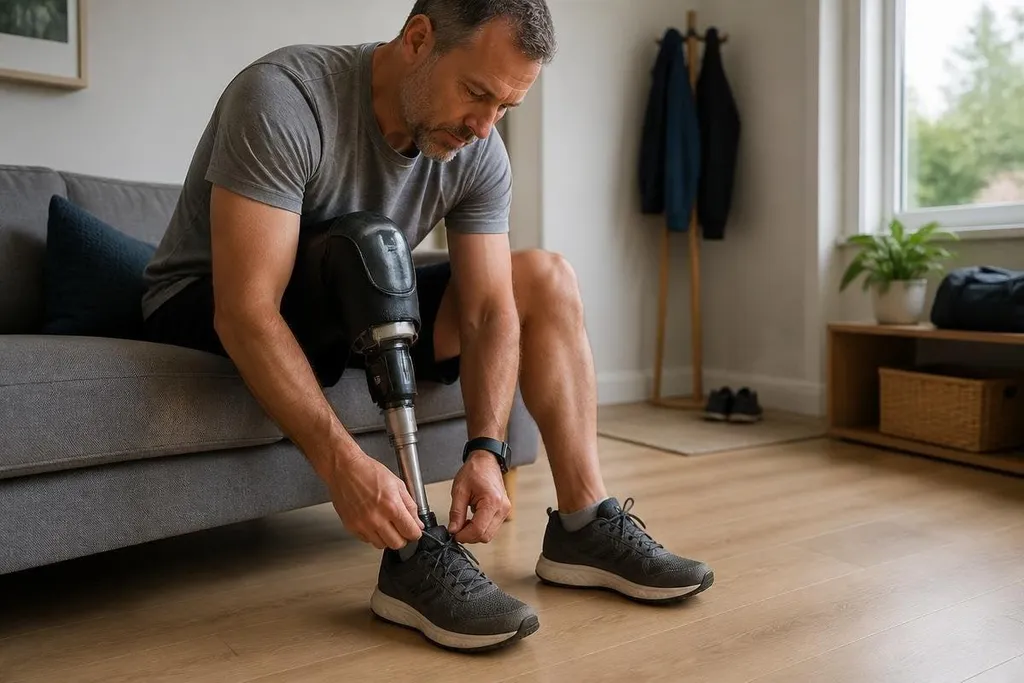
A robotic prosthesis can read muscle signals, move a joint, and adjust resistance as you walk. The harder test starts after the clinic visit, when battery charging, sweat, fit, repair, and control all meet daily life.
- Muscle sensors can guide powered movement.
- Motors and batteries add weight and care needs.
- Comfort and control decide whether the device gets used.
How robotic prosthetics move
Many powered prostheses use myoelectric control. Sensors on the residual limb read small electrical signals from muscles, then software turns those signals into commands for a motor. A hand may open when one signal appears and close when another does.
That link can give a person more control than a passive limb. It also takes practice. The user must create signals the sensors can read, and the socket must hold those sensors in the right place as the limb moves.
Powered leg joints work in a different way. A knee or ankle can change resistance during walking, support the leg as the user stands, or assist motion at a joint. The useful setting depends on the task, the walking surface, and the person’s remaining muscle control.
Where the gains appear
The main benefit is control over a movement that a passive prosthesis cannot produce on its own. With a powered hand, a person can open and close without moving the opposite shoulder or body to position the fingers.
That control may help with tasks that need a steady grip or a change in hand position. The result still depends on the object, the user’s training, and the software settings. A device that works well for a cup may need a different grip for a bag or a tool.
Powered leg joints can also change how a person handles standing and walking. A knee that resists bending at the right moment may help support the body. The device must react at the right time, because a late response can make a step feel unsafe rather than easier.
The risks after daily use begins
Weight is a direct trade-off. Motors, sensors, batteries, and control boards add parts that a passive device does not need. That extra weight can increase fatigue, especially during long periods of walking or repeated hand use.
The socket creates another limit. It connects the prosthesis to the body, so pressure, heat, sweat, or movement can cause skin problems. A sensor that loses contact can also make the device ignore a command or respond at the wrong time.
Battery use adds a task to the day. A person may need to charge the device before work, carry a charger, or switch to a safer mode when power runs low. Water, dust, drops, and impact also matter because electronic parts need protection that a passive limb may not require.
Control errors deserve careful attention. A robotic hand can close before the object is placed correctly.
An uneven surface can make a powered knee react in a way the user did not expect. Training, physical safeguards, and a clear way to stop powered movement all belong in the fitting process.
People comparing powered prostheses can use Robot24.com robotics coverage to compare a prosthesis’s control system with documented work on robot sensors before judging what it can do.
What remains unproven for each person
A strong demonstration does not show how a prosthesis performs after hours of use. It may show one task, one user, and one carefully prepared setting. That leaves open questions about comfort, skin health, charging, repairs, and control during ordinary work.
Access can also decide the result. A device may need software updates, a trained clinician, replacement parts, and regular adjustments. If those services are hard to reach, a technically capable prosthesis may spend more time unused than expected.
I’d judge a robotic prosthesis by the tasks it supports on an ordinary day, not by the number of motions in a demonstration.
A practical check before choosing
Use these points during a fitting or product review:
- Name the daily tasks: Write down the grips, steps, surfaces, and work periods that matter to you.
- Test sensor control: Ask to repeat commands after walking, sitting, sweating, and changing clothes.
- Check the stop method: Find the physical or software control that halts powered movement.
- Measure care needs: Ask how often the socket, sensors, battery, and software need attention.
- Plan for low power: Find out what the prosthesis does when the battery is empty or the system detects an error.
- Price the support: Include fitting visits, repairs, replacement parts, and travel to the clinic.
The best device is the one that keeps its useful control after the fitting, the first long day, and the first repair question. Before choosing, ask for a trial that matches your real tasks and a clear plan for what happens when the robot cannot read your next move.